Start with the operation, not the feature list
A request such as “build a dashboard” is not yet a requirement.

Custom software is valuable when generic tools force important workflows into awkward compromises. The goal is not to create more technology. It is to understand the operation, remove friction, connect reliable systems and create software the organization can own and improve.
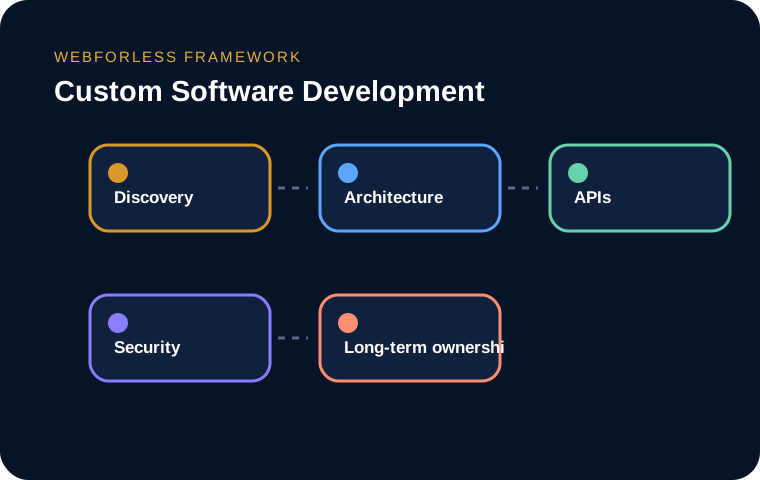
Custom software is valuable when generic tools force important workflows into awkward compromises. The goal is not to create more technology. It is to understand the operation, remove friction, connect reliable systems and create software the organization can own and improve.
A request such as “build a dashboard” is not yet a requirement.
A minimum viable product should be the smallest coherent system that creates value and can be safely operated.
Architecture balances simplicity, reliability, cost, scale, integration and team capability.
APIs are contracts between systems.
Security is not a final penetration test.
Useful testing combines automated unit and integration checks with workflow, accessibility, security, performance and user acceptance testing.
A request such as “build a dashboard” is not yet a requirement. Discovery examines users, decisions, data, exceptions, handoffs and risks. The team should understand the current workflow and the desired outcome before choosing screens or technology.
The purpose is not to add process for its own sake. The purpose is to make decisions visible, reduce avoidable risk and build a result that remains understandable after launch. Teams should document assumptions, assign ownership and verify the experience using real tasks rather than relying only on a tool score.
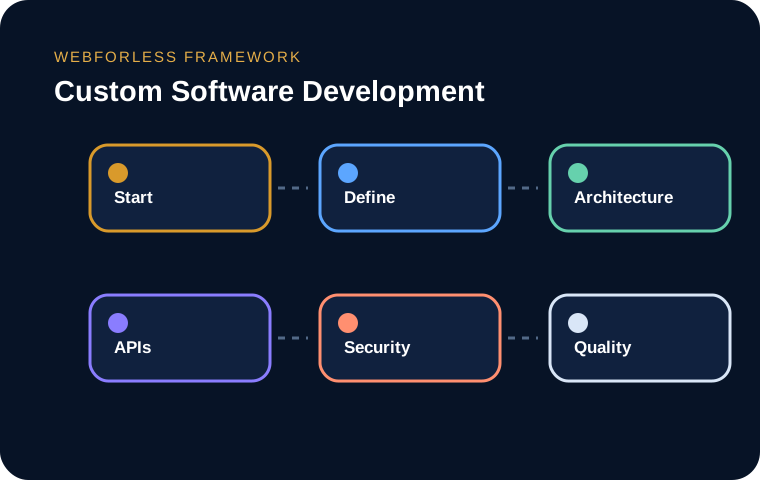
A minimum viable product should be the smallest coherent system that creates value and can be safely operated. It should not be a random collection of half-finished features. Prioritization considers user value, operational dependency, technical risk and learning.
The purpose is not to add process for its own sake. The purpose is to make decisions visible, reduce avoidable risk and build a result that remains understandable after launch. Teams should document assumptions, assign ownership and verify the experience using real tasks rather than relying only on a tool score.
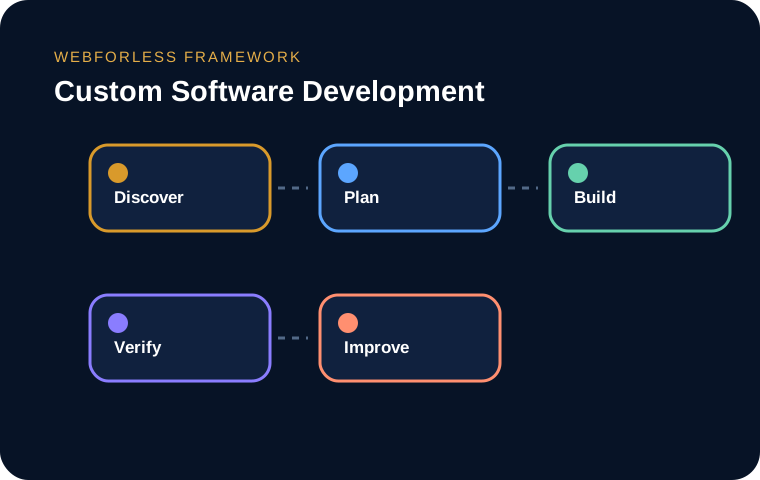
Architecture balances simplicity, reliability, cost, scale, integration and team capability. A modular monolith can be better than premature microservices. A managed platform can be better than owning every server. The right choice is the simplest one that meets real constraints.
The purpose is not to add process for its own sake. The purpose is to make decisions visible, reduce avoidable risk and build a result that remains understandable after launch. Teams should document assumptions, assign ownership and verify the experience using real tasks rather than relying only on a tool score.
APIs are contracts between systems. Good contracts use clear resources, validation, authentication, versioning, errors and documentation. Integrations also require retry behaviour, rate limits, monitoring and plans for external outages.
The purpose is not to add process for its own sake. The purpose is to make decisions visible, reduce avoidable risk and build a result that remains understandable after launch. Teams should document assumptions, assign ownership and verify the experience using real tasks rather than relying only on a tool score.
Security is not a final penetration test. Threat modelling, least privilege, encryption, secure defaults, logging, dependency management and recovery planning should influence architecture and implementation from the beginning.
The purpose is not to add process for its own sake. The purpose is to make decisions visible, reduce avoidable risk and build a result that remains understandable after launch. Teams should document assumptions, assign ownership and verify the experience using real tasks rather than relying only on a tool score.
Useful testing combines automated unit and integration checks with workflow, accessibility, security, performance and user acceptance testing. Production monitoring then verifies behaviour in the real environment.
The purpose is not to add process for its own sake. The purpose is to make decisions visible, reduce avoidable risk and build a result that remains understandable after launch. Teams should document assumptions, assign ownership and verify the experience using real tasks rather than relying only on a tool score.
Custom software becomes an operational asset. It needs documentation, support, observability, dependency updates, user feedback and a roadmap. Contracts should make code, data, credentials and deployment responsibilities clear.
The purpose is not to add process for its own sake. The purpose is to make decisions visible, reduce avoidable risk and build a result that remains understandable after launch. Teams should document assumptions, assign ownership and verify the experience using real tasks rather than relying only on a tool score.
Use these prompts during planning, review and launch. The downloadable guide expands them into worksheets your team can complete.
The tools and terminology keep changing, but the strongest projects still begin with a clear purpose, understandable ownership and respect for the person using the website. A fashionable technique cannot rescue weak information architecture, fragile implementation or unclear responsibility.
Use the printable workbook to document decisions, risks, responsibilities and verification steps before and after launch.
A useful answer depends on the website, audience, risk and desired outcome. Begin with an audit, document assumptions and validate changes against real tasks.
Start with evidence and priorities, implement the smallest coherent improvement, verify the result and keep an ownership plan for future change.
It is a structured approach that aligns technology, content and business requirements rather than treating one isolated feature as the whole solution.
It is a structured approach that aligns technology, content and business requirements rather than treating one isolated feature as the whole solution.
Start with evidence and priorities, implement the smallest coherent improvement, verify the result and keep an ownership plan for future change.
The business should retain control of essential accounts, data and access, while responsibilities are clearly documented with any provider.
Start with evidence and priorities, implement the smallest coherent improvement, verify the result and keep an ownership plan for future change.
Start with evidence and priorities, implement the smallest coherent improvement, verify the result and keep an ownership plan for future change.
Connect this topic with the wider website system.
Continue learningConnect this topic with the wider website system.
Continue learningConnect this topic with the wider website system.
Continue learningConnect this topic with the wider website system.
Continue learningConnect this topic with the wider website system.
Continue learningConnect this topic with the wider website system.
Tell us what the website or system needs to accomplish, what is currently getting in the way and which risks matter most.