
Begin with the business purpose
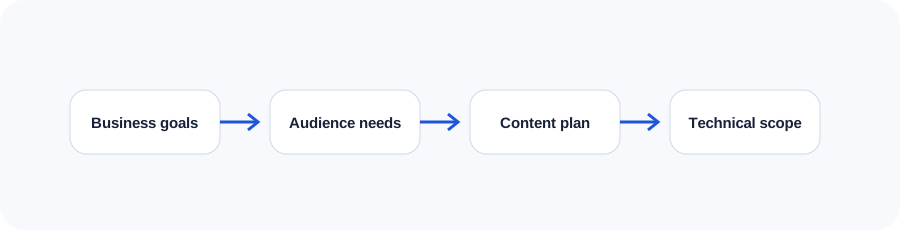
A project starts with a problem to solve, not a list of pages. A useful brief explains what is changing, why it matters now and what the website should help the organization accomplish.
Define audiences and decisions
Audience profiles should describe context and decisions rather than stereotypes. What does the visitor already know? What creates uncertainty? What proof is needed? What must happen before the person is ready to contact, purchase or apply?
Build a content inventory
List existing pages, documents, videos, forms and external profiles. Mark each item keep, improve, combine, redirect or remove. This prevents the common redesign failure in which visual production starts before anyone understands the content workload.
Create information architecture
A sitemap groups information into understandable categories. Navigation should reflect visitor tasks, not the internal organization chart. Each planned page needs a clear purpose, primary audience, key question and next action.
Prioritize functionality
Separate essential launch requirements from later improvements. For each feature, document users, inputs, outputs, edge cases, permissions and operational ownership. A “simple calculator” may require pricing rules, validation, error handling, reporting and future updates.
Define success and measurement
Select outcomes before launch: qualified enquiries, completed applications, reduced support requests, bookings or content engagement. Decide what data is needed, how consent will be handled and who reviews the results.
Plan ownership and governance
Assign owners for content, approvals, technical maintenance, domain access, backups and privacy requests. Set a realistic review rhythm. A website without ownership slowly becomes inaccurate even when the code remains functional.
Use the companion workbook
Turn the lesson into a practical review with prompts, checklists and space for project notes.
Frequently asked questions
How long should website planning take?
It depends on complexity. A small informational site may need focused workshops and content review; software or migration projects may require several discovery cycles.
Should every page be planned before design begins?
The main architecture and priority page types should be understood. Lower-priority content can be refined iteratively when the design system is stable.
What belongs in a website brief?
Business context, audiences, goals, content, scope, constraints, integrations, measurements, responsibilities and approval process.
Should SEO research happen during planning?
Yes. Search behaviour can reveal audience language, missing questions and useful page relationships, but it should not replace customer and business research.
Who should approve content?
Use a small, named approval group. Broad undefined approval chains create delay and contradictory feedback.
Continue learning
Use the next guide, an interactive tool or the related service page to turn this lesson into a practical decision.