Planning a new website
Clarify goals, audiences, ownership, scope and platform requirements before design begins.
Start with website planning →
WebForLess Academy turns more than two decades of practical website work into clear lessons, diagrams, checklists and downloadable workbooks.
You do not need to read every guide in order. Start with the situation that matches your current work, then follow the recommended next step.
Clarify goals, audiences, ownership, scope and platform requirements before design begins.
Start with website planning →Review speed, accessibility, content structure, internal links and technical search foundations.
Run the health assessment →Coordinate redirects, forms, analytics, content, security, accessibility and post-launch checks.
Use the launch guide →Connect SEO, technical SEO, structured data, content strategy and AI-search readiness.
Follow the search path →These lessons follow the sequence most teams need: understand the system, plan the work, improve performance and accessibility, then launch carefully.
Understand the full journey from domain to browser.
Start lesson →Define purpose, audience, scope and governance.
Start lesson →Build fast, stable and responsive experiences.
Start lesson →Remove barriers through design, content and code.
Start lesson →Coordinate migration, QA, deployment and monitoring.
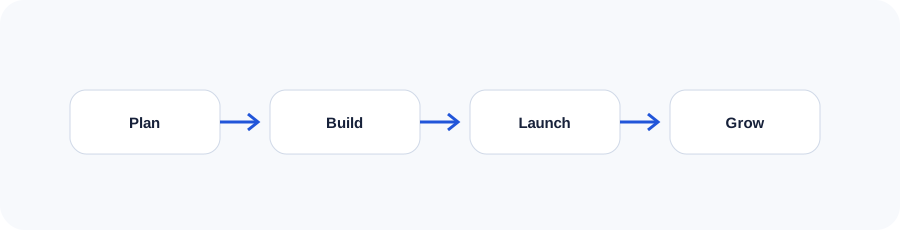
Start lesson →How Websites Work → Website Planning → Website Design → Responsive Design
Website Speed → Accessibility → Launch → Maintenance → Hosting
SEO → Technical SEO → Structured Data → AI Search Optimization
Every lesson is designed to be useful even when the reader never hires WebForLess. Clear explanations help owners ask better questions, compare proposals and protect long-term ownership.
Five connected guides for search understanding, editorial planning, platform decisions and long-term ownership.
Learn how structured data describes organizations, services, articles, products and relationships without creating claims that the visible page cannot support.
Learn how descriptive links, topic hubs, navigation and contextual pathways distribute attention and make a website easier to understand.
Build a content system around audience questions, business evidence, search intent, editorial ownership and continuous improvement.
Understand HTTPS, updates, access control, backups, monitoring, secure forms and incident preparation without fear-based marketing.
Compare static HTML, WordPress, Shopify, Webflow, hosted builders, headless CMS and custom systems according to ownership, workflows and maintenance.
Turn Academy concepts into decisions with private, browser-based assessments, checklists and planning wizards.
Score eight areas and receive prioritized recommendations.
Compare platform directions around real operating needs.
Create a printable project brief.
Track and print launch readiness.
Review six SEO foundations.