Understand what hosting provides
A hosting platform supplies compute, memory, storage, networking and supporting services.

Hosting is the operating environment behind a website. The right choice is not simply the plan with the largest storage number. It should match traffic, application complexity, security, support, recovery needs and the level of technical ownership the organization can sustain.
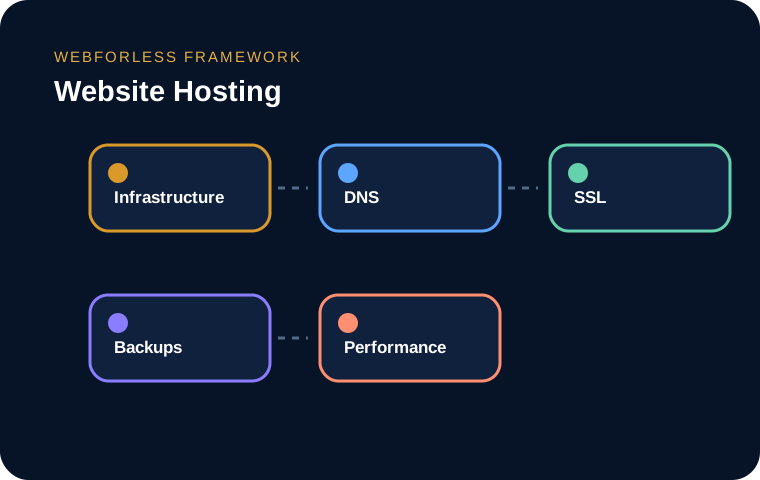
Hosting is the operating environment behind a website. The right choice is not simply the plan with the largest storage number. It should match traffic, application complexity, security, support, recovery needs and the level of technical ownership the organization can sustain.
A hosting platform supplies compute, memory, storage, networking and supporting services.
Shared hosting is economical for modest sites but resources are shared.
A domain is a critical business asset.
HTTPS encrypts data in transit and supports browser trust, but a certificate does not secure application code, passwords or servers.
Provider snapshots are helpful, but recovery planning should consider independent copies, database consistency, retention and the possibility of a provider account compromise.
Hosting affects response time, concurrency and reliability, but it cannot compensate for unoptimized code and media.
A hosting platform supplies compute, memory, storage, networking and supporting services. Some plans also manage operating systems, patches, caching, backups and support. Comparing plans requires knowing which responsibilities belong to the provider and which remain with the website owner.
The purpose is not to add process for its own sake. The purpose is to make decisions visible, reduce avoidable risk and build a result that remains understandable after launch. Teams should document assumptions, assign ownership and verify the experience using real tasks rather than relying only on a tool score.
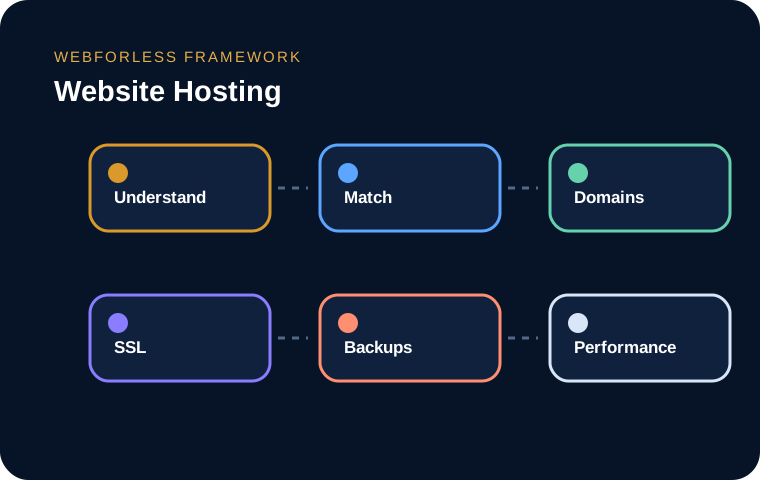
Shared hosting is economical for modest sites but resources are shared. VPS and cloud instances offer more control and isolation. Managed platforms reduce administration. Dedicated infrastructure suits specialized workloads but increases responsibility and cost.
The purpose is not to add process for its own sake. The purpose is to make decisions visible, reduce avoidable risk and build a result that remains understandable after launch. Teams should document assumptions, assign ownership and verify the experience using real tasks rather than relying only on a tool score.
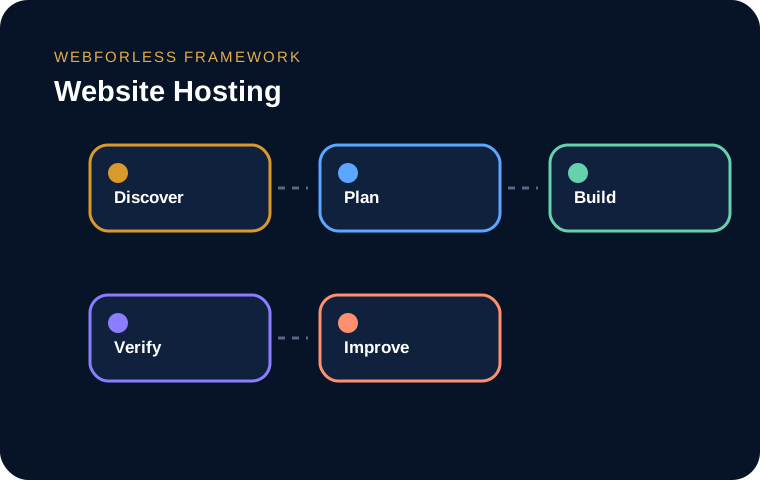
A domain is a critical business asset. Registration, DNS and hosting may be supplied by different companies. The organization should know where each is managed, use protected accounts and document records before changes.
The purpose is not to add process for its own sake. The purpose is to make decisions visible, reduce avoidable risk and build a result that remains understandable after launch. Teams should document assumptions, assign ownership and verify the experience using real tasks rather than relying only on a tool score.
HTTPS encrypts data in transit and supports browser trust, but a certificate does not secure application code, passwords or servers. Certificates should renew automatically and redirects should consistently send visitors to the secure canonical version.
The purpose is not to add process for its own sake. The purpose is to make decisions visible, reduce avoidable risk and build a result that remains understandable after launch. Teams should document assumptions, assign ownership and verify the experience using real tasks rather than relying only on a tool score.
Provider snapshots are helpful, but recovery planning should consider independent copies, database consistency, retention and the possibility of a provider account compromise. Recovery objectives define how much data and downtime the business can tolerate.
The purpose is not to add process for its own sake. The purpose is to make decisions visible, reduce avoidable risk and build a result that remains understandable after launch. Teams should document assumptions, assign ownership and verify the experience using real tasks rather than relying only on a tool score.
Hosting affects response time, concurrency and reliability, but it cannot compensate for unoptimized code and media. Caching, a content delivery network, efficient databases and measured application behaviour work together with infrastructure.
The purpose is not to add process for its own sake. The purpose is to make decisions visible, reduce avoidable risk and build a result that remains understandable after launch. Teams should document assumptions, assign ownership and verify the experience using real tasks rather than relying only on a tool score.
Website hosting and business email are different services even when bundled. Reliable email needs domain authentication, mailbox security, deliverability controls and clear ownership. Transactional website messages may benefit from a dedicated delivery provider.
The purpose is not to add process for its own sake. The purpose is to make decisions visible, reduce avoidable risk and build a result that remains understandable after launch. Teams should document assumptions, assign ownership and verify the experience using real tasks rather than relying only on a tool score.
Use these prompts during planning, review and launch. The downloadable guide expands them into worksheets your team can complete.
The tools and terminology keep changing, but the strongest projects still begin with a clear purpose, understandable ownership and respect for the person using the website. A fashionable technique cannot rescue weak information architecture, fragile implementation or unclear responsibility.
Use the printable workbook to document decisions, risks, responsibilities and verification steps before and after launch.
It is a structured approach that aligns technology, content and business requirements rather than treating one isolated feature as the whole solution.
Choose the option that meets verified requirements with the least unnecessary complexity and a clear maintenance path.
It is a structured approach that aligns technology, content and business requirements rather than treating one isolated feature as the whole solution.
It can influence visibility, usability or reliability, but results depend on implementation quality, competition, user needs and the wider website system.
It is a structured approach that aligns technology, content and business requirements rather than treating one isolated feature as the whole solution.
The business should retain control of essential accounts, data and access, while responsibilities are clearly documented with any provider.
It is important, but it should be evaluated as one part of a complete system rather than a stand-alone guarantee.
Start with evidence and priorities, implement the smallest coherent improvement, verify the result and keep an ownership plan for future change.
Connect this topic with the wider website system.
Continue learningConnect this topic with the wider website system.
Continue learningConnect this topic with the wider website system.
Continue learningConnect this topic with the wider website system.
Continue learningConnect this topic with the wider website system.
Continue learningConnect this topic with the wider website system.
Tell us what the website or system needs to accomplish, what is currently getting in the way and which risks matter most.